
Screen
Commercial Break
The ads are the game - chug while the jingle plays.
Fouls, flags and replays - rules for every broadcast.
Also known as: Game Day Rules
The sports drinking game runs on a simple truth: every broadcast, in every sport, is assembled from the same parts. Slow-motion replays, coaches chewing gum like it insulted them, commentators announcing that the next few minutes are 'crucial,' a fan in face paint losing their mind in 4K. Turn those recurring beats into drink triggers and any game - Football, basketball, soccer, hockey, even golf - Becomes interactive, including the blowouts nobody would otherwise watch past halftime.
That's the real gift of this game: it rescues bad broadcasts. A 3 - 0 snoozer or a 30-point blowout still delivers replays, sideline interviews, and commentary clichés at full rate, so the drinking game keeps humming even when the scoreboard flatlines. It scales from two friends on a couch to twenty people at a watch party, needs zero equipment beyond drinks and a broadcast, and works whether or not anyone in the room actually understands the offside rule.
Any live broadcast works, but stakes help: rivalry games, playoffs, and matches where someone in the room has irrational loyalty all play better. Split the room into two rooting sections, even if allegiances are invented on the spot - Half the triggers work off 'your team,' and manufactured tribalism is instant entertainment.
Choose six to eight rules from the list below, balancing on-field events (penalties, replays, timeouts) with broadcast clichés (crucial moments, sideline reports). Sport-agnostic triggers keep the game fair when half the room doesn't know the rules of the actual sport. Post the list under the TV where every angle of couch can read it.
Match your pour to the broadcast: a soccer match is two tight 45-minute halves, while a football broadcast sprawls past three hours with constant stoppages. Sips only, beer or lighter, and use natural breaks - Halftime, period changes, the seventh inning - As mandatory water-and-food checkpoints rather than catch-up drinking opportunities.
The secret to this format is that the broadcast itself is the richer trigger source. Commentators repeat the same phrases every game, directors cut to the same crowd shots, and sideline reporters ask the same questions. Players who watch for production clichés drink and deal more accurately than the ones just following the ball.
When either team scores, the opposing rooting section drinks - Scaled to the sport, so a soccer goal costs more sips than a basketball basket. Reviews and overturned calls hit everyone. Keep celebration and penalty drinking proportionate: the memorable moments should be loud, not liquid. A game-winning score in the final minute is worth a toast, never a chug race.
Play through the final whistle, using the natural end of the broadcast as your hard stop - No overtime rules unless the game itself goes to overtime, in which case halve all sip sizes because you didn't budget for this. Losers' section clears the snack table; winners pick the next watch party. Postgame interviews are optional bonus triggers and reliably clichéd.
Before kickoff, every player writes three predictions on a shared board - First scorer, total penalties, whether the broadcast cries 'upset' before halftime. Correct calls deal five sips at the moment they land; busted props cost two at the final whistle. It's fantasy sports compressed into one game, and it keeps everyone locked in during garbage time.
Build five-by-five bingo cards from commentary clichés - 'they came to play,' 'momentum shift,' 'crowd is a factor' - One card per player. Mark squares as the booth delivers them; first bingo deals a round of sips to the table. Veteran viewers of a particular commentary duo hold a terrifying advantage, which is exactly the point.
Each player drafts individual players from both teams before the game, snake-draft style. Your athletes scoring or making highlights lets you deal sips; their penalties, turnovers, and misses cost you. Suddenly everyone has a rooting interest in both squads and watches the whole field instead of the ball. Works spectacularly for all-star games and finals.
Everyone commits to the underdog before the game. While the favorite leads, sip sizes are halved and triggers hit gently; every time the underdog scores or takes the lead, the room erupts and deals double. This variation converts blowouts into low-key hangouts and comebacks into legendary nights - The game's drama sets your drinking thermostat automatically.
Divide the broadcast into quarters, halves, or periods, and rotate one player as Captain for each segment. The Captain may add one custom trigger for their segment only - 'drink when the camera finds that one guy in the third row' - And it retires when their reign ends. Fresh micro-rules keep long broadcasts lively without permanently bloating the rulebook.
Fans have almost certainly been improvising drink-on-that rules around televised sports for as long as bars have had TVs - Informal versions were documented on college campuses by the 1980s. Rule lists for specific sports and even specific commentators spread widely with the early internet, and big annual events like championship games grew their own traditions. The universal any-broadcast version emerged as fans noticed the clichés were identical across every sport.
Published · Last updated · How we research games
The ads are the game - chug while the jingle plays.
Random song, your microphone - sing it or sink it.
Drink on every 'thunder' - and don't stop till the next one.
Two teams, one word - drink every time the song says it.
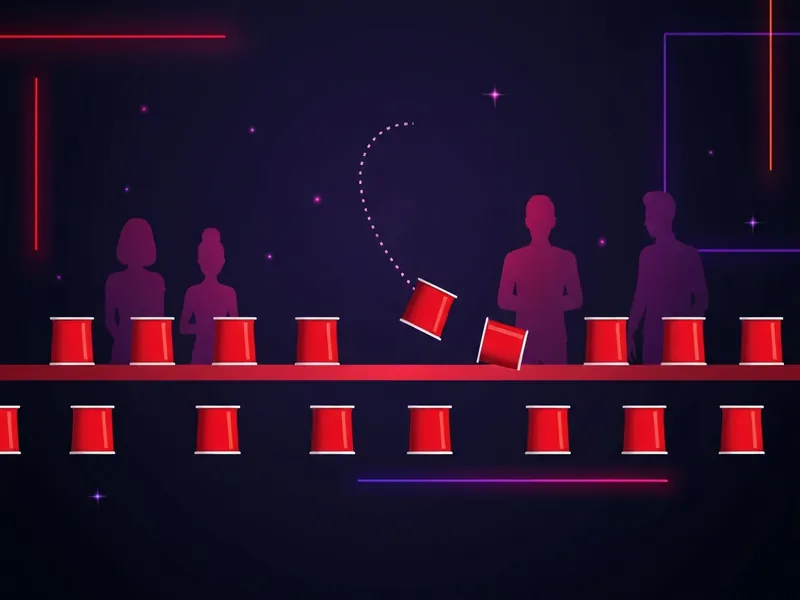
Drink, set, flip - the fastest team relay in party sports.
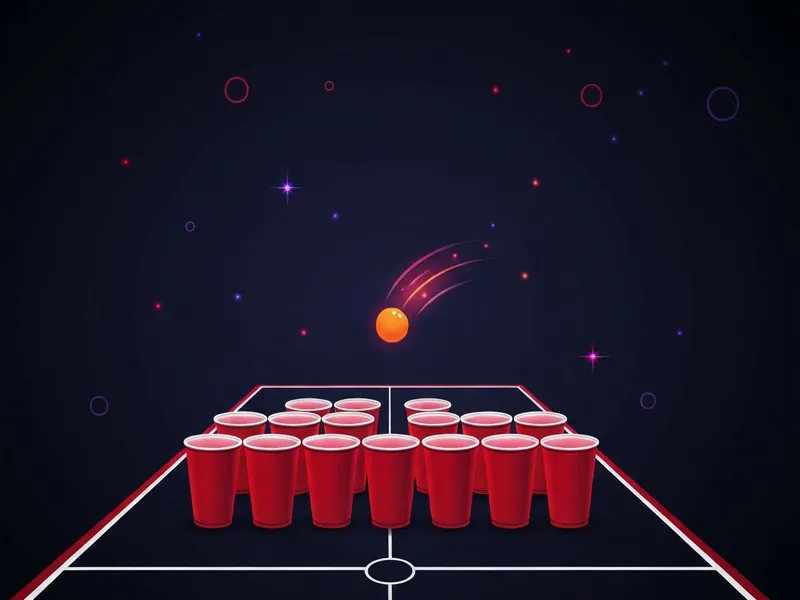
Ten cups, two balls, eternal glory - the classic table sport.
BestDrinkingGame.net is a drinking-games site made for adults. Please confirm you are of legal drinking age before you come in.
By entering you agree to our terms and to drink responsibly. Know the legal drinking age where you live (21+ in the US).
You need to be of legal drinking age to use this site. Thanks for stopping by, and stay safe.
Every game here can also be played alcohol-free once you're old enough. See you soon.