
Word
The Story Game
Build a story one word each - break the flow, take a drink.
Count around the circle - but 5s bizz, 7s buzz, and brains melt.
Also known as: Fizz Buzz (drinking)
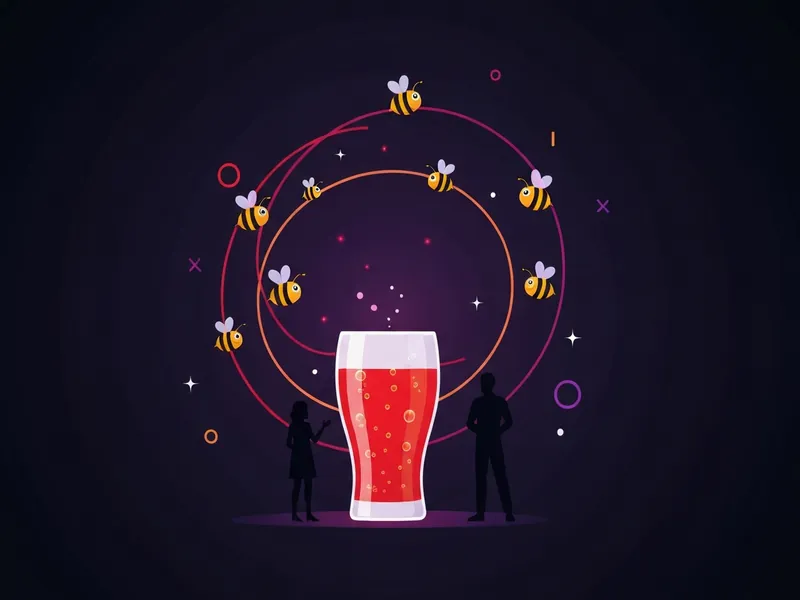
Bizz Buzz is counting, weaponized. The circle counts upward one number per person - one, two, three, four - except any number divisible by five becomes 'bizz' and any number divisible by seven becomes 'buzz.' Say the number when you should have said the word, say the wrong word, or freeze while your brain does long division, and you drink. Then the count resets to one and the climb begins again.
On paper it's third-grade math. In practice, the sevens ambush people every single time - 14, 21, 28 arrive on nobody's schedule - and the true horror lives at 35, where bizz and buzz collide into 'bizz buzz.' Watching a table of otherwise functional adults disintegrate somewhere between 12 and 17 is the whole show. It needs no equipment, no setup, and no mercy.
The first player says 'one,' the next says 'two,' and the count travels clockwise, one number per person. Keep a steady, brisk rhythm - Bizz Buzz played slowly is just math homework. The rhythm is also the referee: when someone breaks it, everyone hears the stumble instantly.
Any number divisible by five is never spoken - the player says 'bizz' instead. So the count runs: three, four, bizz, six. Multiples of five are mercifully predictable (they end in 5 or 0), which is why fives alone almost never kill anyone. They exist to build false confidence before the sevens arrive.
Any number divisible by seven becomes 'buzz': six, buzz, eight. Unlike fives, sevens follow no pattern your tipsy brain can track - 7, 14, 21, 28 land on random-feeling numbers, and 21 in particular has ended more streaks than any number in the game. Sevens are where Bizz Buzz stops being cute.
Numbers divisible by both five and seven - 35, 70, 105 - require the full 'bizz buzz.' The table can see 35 coming from ten numbers away, and the doomed player can feel everyone watching. Nailing it earns applause; blowing it after all that anticipation earns a drink and a memory that will be referenced for the rest of the night.
A player drinks when they say a number that should have been a word, say the wrong word, speak out of turn, or hesitate past a beat or two. After the penalty, the count resets to one, starting with the player who failed. Resets sting because the group loses all its progress - the shared goal of finally passing 35 is real motivation.
Once the table can routinely clear 40, escalate: make numbers CONTAINING a 5 or 7 (like 17, 52, 57) trigger too, or add a reversal rule where every 'buzz' flips the counting direction. Each added rule roughly doubles the failure rate. The game's ceiling is exactly as high as your group's hubris.
Every 'buzz' reverses the direction of counting. Now sevens don't just replace a number - they fling the count back at the player who just relaxed. The double whammy at 35 ('bizz buzz' plus a reversal) is one of the most reliably lethal moments in all of drinking games. Highly recommended once basics are mastered.
Numbers merely containing a 5 or 7 trigger the word too: 17 is 'buzz,' 52 is 'bizz,' and 57 is 'bizz buzz' despite being divisible by neither. This roughly triples the trigger density and makes the 50s (bizz, bizz-one... wait, no) a genuine minefield. The table will not survive to 60. That's fine.
Add a third rule: multiples of three become 'bang.' Now 15 is 'bizz bang,' 21 is 'buzz bang,' and 105 - if you somehow get there - is the mythical 'bizz buzz bang.' With three overlapping cycles, almost half of all numbers are words. This is the expert tier, and it is not survivable past 30 for most tables.
One player claps a beat and every number must land on it, with the tempo rising slightly each full lap. No thinking time whatsoever - the sevens must be pre-computed or they will eat you. Rounds are short, loud, and end in spectacular pile-ups. Perfect as a finale when the group wants one last flame-out.
Instead of saying 'bizz,' players clap; instead of 'buzz,' they slap the table. The count becomes a strange percussion piece punctuated by numbers. Mixing physical actions with mental math causes a completely different genre of failure - people confidently clapping on 6 - and works brilliantly in loud rooms where words get lost.
Bizz Buzz descends from Fizz Buzz, a counting game played in British classrooms and around campfires for generations as mental arithmetic practice; drinkers appear to have adopted it by the mid-20th century, with the name drifting to 'Bizz Buzz' in pub versions. Cementing its nerd credentials, the same game later became a famous programming interview question. Who first attached drinks to the divisibility rules is, as usual, lost to history.
Published · Last updated · How we research games
Build a story one word each - break the flow, take a drink.
Drum the table, throw your sign, catch theirs - miss and drink.

Spot the lie or drink - the classic icebreaker with a twist.
Pick a topic, go around the circle, don't you dare blank.

A counting game so simple that everyone loses.
Roll a three, crown a victim - long live the Three Man.
BestDrinkingGame.net is a drinking-games site made for adults. Please confirm you are of legal drinking age before you come in.
By entering you agree to our terms and to drink responsibly. Know the legal drinking age where you live (21+ in the US).
You need to be of legal drinking age to use this site. Thanks for stopping by, and stay safe.
Every game here can also be played alcohol-free once you're old enough. See you soon.