Cards
Indian Poker
Everyone can see your card except you.
Four guesses, four cards - call them right or drink them wrong.
Also known as: Horses (variant) · Red or Black
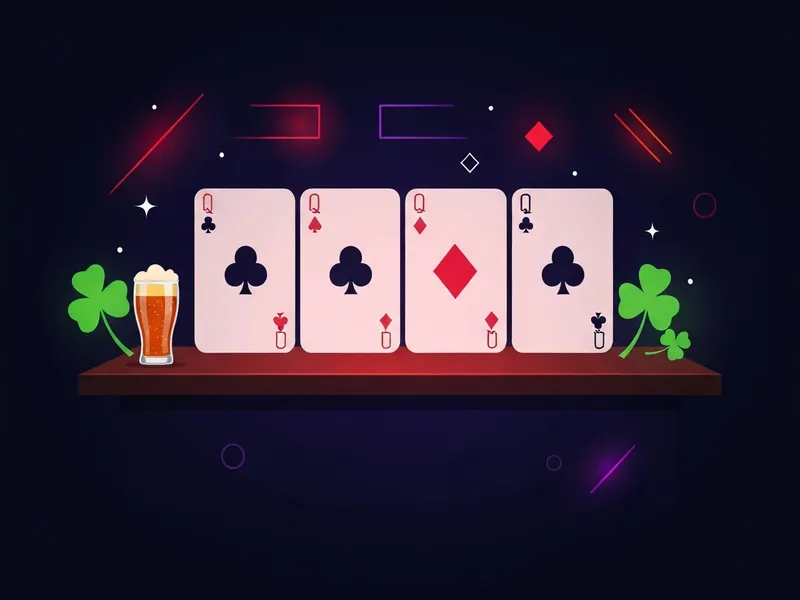
Irish Poker hands every player four face-down cards and four brutally simple questions. Red or black? Higher or lower? Inside or outside? Which suit? Guess right and you get to hand out drinks; guess wrong and you take them yourself, with the stakes doubling every round. There is no folding, no chips, and no poker face required - just you, four cards, and a fifty-fifty that somehow never feels like fifty-fifty.
What makes Irish Poker a pregame legend is the second act. Once everyone has sweated through their four guesses, the dealer flips a give-and-take board of community cards, and suddenly those same four cards in front of you become weapons. Match a card on the give side and you assign drinks; match the take side and you swallow them. It plays in twenty minutes, teaches in two, and punishes overconfidence beautifully.
Starting left of the dealer, each player calls red or black, then flips their first card. Correct means you give that many drinks to anyone at the table; wrong means you drink them yourself. Most tables value round one at two drinks. Simple odds, pure coin flip - but the table remembers who started hot and who started drinking.
Each player now guesses whether their second card will be higher or lower than their first, then flips it. Aces are usually high, and an exact tie means you drink automatically. The stakes double to four drinks. This is where card counting sneaks in: if the table has burned through low cards, adjust your call accordingly.
Guess whether your third card falls inside or outside the range set by your first two cards. Holding a 3 and a King, inside is the smart call; holding a 7 and a 9, outside is nearly free money. Ties on the boundary mean you drink. Six drinks ride on this one, so think before you blurt.
The cruelest round: name the exact suit of your final card. It is a one-in-four shot worth eight drinks, so most players lose here - and the table loves them for it. Some groups let a correct suit call double to sixteen given out. Track the suits already showing on the table before you commit to hearts.
After the guessing rounds, the dealer lays out the remaining deck in two columns of four (or five) cards: one Give column, one Take column. Flip them one at a time, alternating sides, starting from the bottom. Each row is worth more than the last - typically two, four, six, then eight drinks or a full chug on top.
When a board card flips, anyone holding a matching rank slaps it down face up. Match on the Give side and you deal that row's drinks to anyone you like; match on the Take side and you drink them yourself. Holding two matching cards doubles the effect. Once the board is done, the game is over - shuffle and redeal.
The stripped-down ancestor: play only the four guessing rounds with no board phase, but run three full cycles so every player makes twelve guesses total. Drink values stay flat at two per round instead of doubling. It is faster to teach and gentler on the table, which makes it the better pick for early in the night.
Whoever takes the most drinks across the four rounds becomes the bus driver and must ride a fresh five-card higher-or-lower gauntlet solo, restarting from card one on every miss. The table heckles; the driver suffers. It bolts the most feared mechanic in card drinking games onto Irish Poker's back end.
Deal the give-take board as two rows of five instead of four, with the fifth card in each column worth a waterfall. More board cards means more matches, more chaos, and far more drinks in circulation - save this one for a rowdy table that found the standard board too tame.
Swap the 2-4-6-8 doubling for a flat one-sip-per-round scale, or convert drinks into seconds of sipping rather than gulps. The guessing tension stays fully intact while total consumption drops by more than half. Ideal for long pregames where Irish Poker is the opener, not the main event.
Every drink you would take can be swapped for answering a truth question chosen by the player on your left. Wrong suit call in round four? That is eight questions or eight drinks, your pick. It turns the game into a confession engine and works perfectly for mixed or low-key groups.
Irish Poker's precise origins are hard to pin down, and despite the name there is no strong evidence it started in Ireland. It appears to have grown out of the older bar games Red or Black and Horses, spreading through American colleges in the 2000s. The give-and-take board phase was likely bolted on later, borrowed from pyramid-style card games, which is why some tables skip it entirely.
Published · Last updated · How we research games
Everyone can see your card except you.

Lie beautifully or drink honestly.
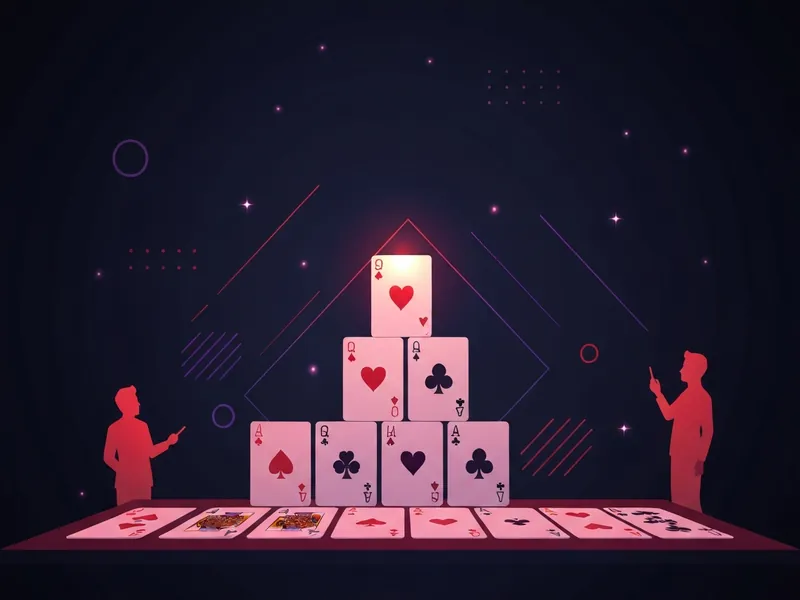
Every flipped row raises the stakes - bluff your way up.
Truths, dares and drinks dealt from a pyramid of fate.
Roll a three, crown a victim - long live the Three Man.
Drink, set, flip - the fastest team relay in party sports.
BestDrinkingGame.net is a drinking-games site made for adults. Please confirm you are of legal drinking age before you come in.
By entering you agree to our terms and to drink responsibly. Know the legal drinking age where you live (21+ in the US).
You need to be of legal drinking age to use this site. Thanks for stopping by, and stay safe.
Every game here can also be played alcohol-free once you're old enough. See you soon.