Cards
Bullshit
Lie beautifully or drink honestly.
Everyone can see your card except you.
Also known as: Blind Man's Bluff · Forehead Poker
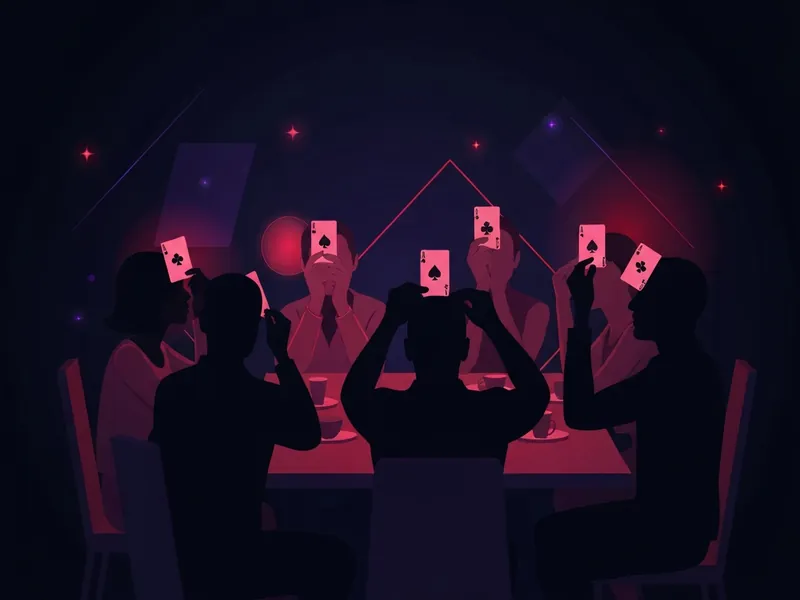
Indian Poker flips the entire concept of poker on its head: you can see everyone's card except your own. Each player presses a single card to their forehead, face out, and the whole table instantly knows exactly how strong you are - except you. All you have to go on is the cards staring back at you and the poorly hidden smirks of your friends. Highest card wins the round; everyone else drinks.
It is the rare drinking game that gets funnier the longer you stare at it. Confident players bet big on a forehead 2 while the table eggs them on. Paranoid players fold a King because someone raised an eyebrow. Since the drinking is tied to betting and bluffing rather than raw chugging, Indian Poker stays social, strategic, and absurd all at once - and every round ends with at least one glorious reveal.
Everyone lifts their card to their forehead simultaneously, face out, without peeking. From this moment you can see every card at the table except the one that matters most. Resist the urge to check reflections in phones, windows, or your drink - most tables punish mirror-peeking with an automatic loss and a double drink.
Scan the other foreheads. If you see mostly low cards, your mystery card is probably competitive; if you are staring down two Kings and a Queen, the math turns grim. Meanwhile, watch faces watching you - a table that suddenly gets encouraging is a table that knows you are carrying a 3 into battle.
Going around the circle, each player either stays in by matching the current bet in sips, raises it, or folds. Folding early caps your loss at the ante; riding a bad card to the end costs the full pot. The betting chatter is the real game - lie, hype, and mislead freely.
Once bets settle and at least two players remain, everyone still in pulls their card off their forehead on a count of three and finally sees what the table has been giggling about. The moment a cocky better discovers their monster hand was a 2 of clubs is the entire reason this game exists.
Highest card wins; ties split the pot or trigger a one-card rematch between the tied players, house choice. Every loser drinks the sips they bet, and folded players drink only their ante. Winners drink nothing and gloat responsibly. Keep the pot honest by tracking bets out loud as they happen.
Cards go to the discard pile - never back into the deck - and the deal rotates one seat left. Play until the deck runs dry, then shuffle everything and start again. Short rounds are the charm here: a full circle takes two minutes, so nobody is ever more than a deal away from redemption.
Lowest card wins instead of highest, which quietly ruins everyone's instincts. Players who spent all night learning to fear a table full of face cards must now fear the 2s, and the smug confidence of someone wearing an unseen ace becomes the funniest thing in the room. Alternate high and low rounds to keep everybody permanently off balance.
Deal two forehead cards per player and score them like a blackjack total, aces counting one or eleven. The extra card doubles the information on the table and makes the betting rounds genuinely strategic, since you can narrow your own likely total by what is missing. Best with six players or fewer so foreheads stay readable.
Before betting, each player must declare out loud what card they think is on their own forehead. Anyone who guesses their exact rank at the reveal hands out five drinks. The declarations add a whole meta-game - the table's reactions to your guess tell you almost as much as the cards do.
Remove everything below 7 so every hand is a close race between big cards. Rounds get tighter, bluffs get bolder, and the giant gap between a forehead 8 and a forehead ace disappears. This version rewards actually reading the table instead of just praying, and it noticeably slows the drinking pace too.
Replace sips with dare tokens: every bet adds a dare to the pot, and the round's loser must perform one dare chosen by the winner. Drinks become optional garnish rather than the engine. This is the go-to version for mixed groups, and the dares people invent by round five get legendary.
Indian Poker is a drinking-game adaptation of Blind Man's Bluff, a poker variant documented in card game collections since at least the mid-20th century. The forehead-card gimmick was popularized for modern audiences by film and TV scenes - most famously the Korean drama and movie versions of one-card betting games - though when drinks first replaced chips is anyone's guess. The name itself is dated, which is why many groups now simply call it Forehead Poker.
Published · Last updated · How we research games
Lie beautifully or drink honestly.
Every flipped row raises the stakes - bluff your way up.
Truths, dares and drinks dealt from a pyramid of fate.
One card each, one chance to dump your dud on your neighbor.
Five dice, one cup, zero honesty - call the bluff or drink it.

You heard your name - drink to find out what they asked.
BestDrinkingGame.net is a drinking-games site made for adults. Please confirm you are of legal drinking age before you come in.
By entering you agree to our terms and to drink responsibly. Know the legal drinking age where you live (21+ in the US).
You need to be of legal drinking age to use this site. Thanks for stopping by, and stay safe.
Every game here can also be played alcohol-free once you're old enough. See you soon.