Screen
Lyric Master
Finish the line or finish your drink.
Hit shuffle - whoever's song it is, drinks (or makes you).
Also known as: Shuffle Roulette · Playlist Roulette
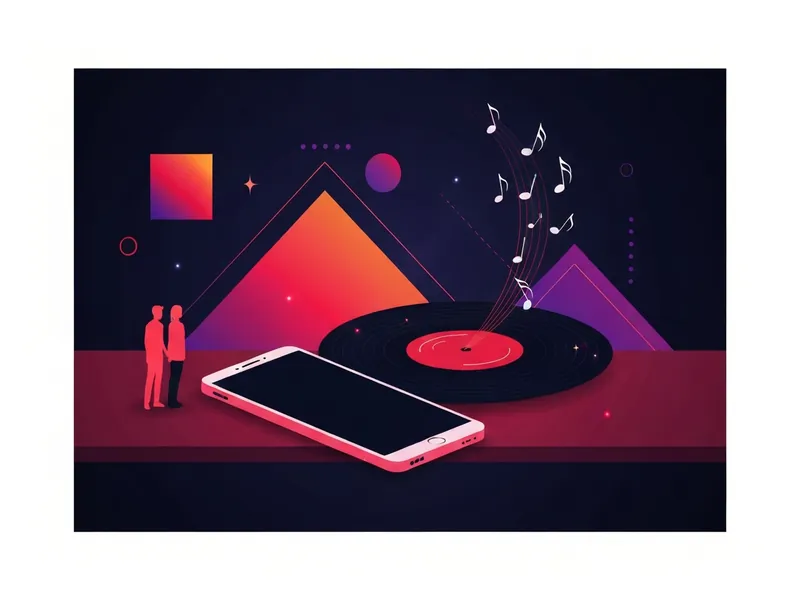
Music Roulette turns your group's playlist into a slot machine. Everyone adds songs to a shared queue, the phone goes on shuffle, and when a track plays, its owner faces the consequences - Drink, or make everyone else drink, depending on your house rules. It needs exactly three things: a phone, a speaker, and a group willing to have their music taste publicly audited. The shuffle button becomes the most powerful object in the room.
The real engine of the game isn't the drinking - It's the exposure. That guilty-pleasure pop anthem you buried in the queue? It will play, everyone will know it's yours, and the table will render judgment. Music Roulette works for three people on a couch or fifteen at a house party, doubles as a self-building party soundtrack, and reliably produces the night's best arguments about what actually counts as a good song.
Every player adds an equal number of songs to a shared playlist - Ideally secretly, so nobody knows which tracks belong to whom. The strategy starts here: do you load crowd-pleasers to stay safe, or plant something unhinged for chaos? Three to five songs per person keeps a session tight; more turns it into an evening.
Put the playlist on shuffle, press play, and surrender control. Nobody touches the phone once the game starts - The shuffle algorithm is the dealer now. Each song must play at least thirty seconds before anyone may vote to move on. Skipping your own song is the deepest possible admission of guilt, and it costs double.
When a track starts, the table gets ten seconds to guess whose it is before the owner must confess. If someone guesses right, the owner drinks; if nobody does, the owner deals sips equal to the number of players fooled. This guessing layer is where the game lives - Your friends' music profiles become evidence.
After ownership is settled, the table votes: banger or crime? A banger means the owner hands out three sips and enjoys their moment. A crime means the owner drinks three and endures the roast. Votes are simple majority, conducted while the song still plays. Lobbying, dancing, and passionate genre defenses are all legal campaign tactics.
Certain moments trigger table-wide rules regardless of ownership: everyone drinks when a song everyone knows drops, last person to start singing along to a chorus drinks, and anyone caught checking the phone to identify a track drinks. These universal triggers keep non-owners invested during every single song instead of waiting for their own turns.
When the queue runs dry, the game ends with awards: the table votes one song Track of the Night - Its owner deals five sips - And one song Worst Crime, whose owner takes a final three and must publicly defend the pick. Then someone inevitably says 'one more round,' and you rebuild the queue with fresh ammunition.
One rotating player sits out as Judge each round and rules on every song solo - Banger or crime, no table vote, no appeals. The Judge's taste becomes the meta-game: players start tailoring queue picks to whoever judges next round. Rotate the robe after every three songs so nobody's vendetta against country music dominates the whole night.
Instead of a shared queue, each round one player DJs a song directly at another player. If the target can name the artist within fifteen seconds, the DJ drinks; if they can't, the target drinks double. Music nerds become apex predators in this version, and the room learns quickly who actually knows their catalog versus who just has playlists.
Restrict the entire queue to a single decade - All eighties, all two-thousands, whatever the room agrees on. Everyone drinks once whenever a song predates every player in the room. Decade Lock flattens the guessing game in the best way, since everyone's picks come from the same era, and it doubles as the most efficient nostalgia delivery system ever built.
The host calls a new theme every three songs - 'songs to cry to,' 'gym music,' 'guilty pleasures' - And players quickly nominate one track each from their own libraries. The table votes on the best fit; the winner deals sips, last place drinks. No pre-built queue needed, which makes this the best spontaneous version for smaller groups.
Everyone wears earbuds connected to the same stream, or one player alone hears the track and must convey it through dance and lip-sync only. The group guesses the song; the performer drinks for every failed guess before someone lands it. Equal parts charades and roulette, this version produces the single most rewatchable phone footage of any variation.
Music Roulette appears to be a genuinely modern game, made possible by smartphones and streaming shuffle - It's hard to imagine the format existing before shared playlists became trivial in the early 2010s. It likely emerged independently at countless parties as groups turned playlist-building into a betting game, spreading through college campuses and social media. Similar shuffle-based party games circulate under names like Playlist Roulette, and no definitive origin has ever been established.
Published · Last updated · How we research games
Finish the line or finish your drink.

Dead parents, talking animals and 'I want' songs - drink up.

Fouls, flags and replays - rules for every broadcast.

The ads are the game - chug while the jingle plays.
The king of card drinking games - every card is a rule.

Bounce, stack, chase - the loudest circle in cup games.
BestDrinkingGame.net is a drinking-games site made for adults. Please confirm you are of legal drinking age before you come in.
By entering you agree to our terms and to drink responsibly. Know the legal drinking age where you live (21+ in the US).
You need to be of legal drinking age to use this site. Thanks for stopping by, and stay safe.
Every game here can also be played alcohol-free once you're old enough. See you soon.