Screen
Power Hour
One shot of beer, every minute, for sixty minutes.
200 sip, 404 drink, 500 finish - the internet's error pages, weaponized.
Also known as: HTTP Status Code Drinking Game · 404 Drinking Game · Developer Drinking Game
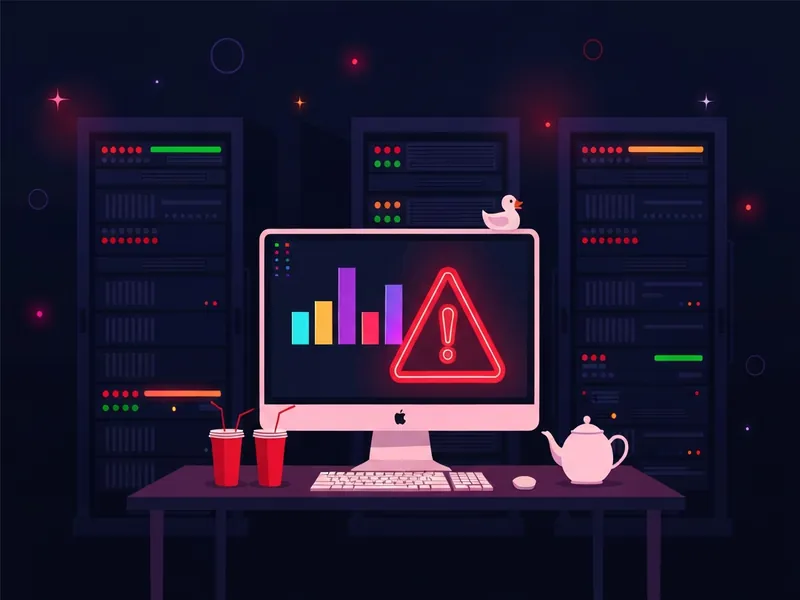
The Status Code Drinking Game turns the internet's error pages into a party. Every web request that has ever loaded (or failed to load) came back with a three-digit HTTP status code - 200 OK when everything works, 404 Not Found when it doesn't, 500 Internal Server Error when something is on fire and nobody knows why. This game hands each of those codes a drinking rule: the 200s are calm sips, the 300s shuffle drinks and seats around the table, the 400s punish individual players for their own bad requests, and the 500s take the whole table down with the server.
You don't need to know anything about computers to play - the deck below explains every card as it deals it, and half the rules are just seat swaps, forbidden words and races dressed up in nerd clothing. But if your group does ship software for a living, this is the definitive tech-team game night: play it card-deck style at the table, or go full log mode and drink to the live status codes scrolling off a real dashboard. Either way, when a 418 I'm a Teapot comes up, you pose.
The whole game hangs on one idea every player can learn in ten seconds: the higher the status code, the worse your night. A 2xx card means success - a calm sip, a toast, a moment of peace. A 3xx card redirects: drinks, seats or penalties get moved to somebody else. A 4xx card is a client error - one specific player messed up and pays for it. A 5xx card is a server error - the infrastructure failed, so the whole table drinks together. Once the group knows the ladder, every card is instantly legible even if nobody has heard of the code on it.
Going clockwise, each player taps the deck below to draw a status code and reads it out - number, name, then the rule. The drawer is the 'client' for that round: when a card says the drawer does something, that's them. Resolve the card, laugh at whoever it hit, and pass the phone left. Rounds take thirty seconds, so the deck moves fast; a full lap of the table is a nice natural checkpoint for water and refills.
Client-error cards name their own victim: 400 Bad Request punishes whoever asks a question, 401 Unauthorized locks a player out until the table 'authenticates' them, 403 Forbidden creates a banned word, and 404 Not Found hunts down the player who is slowest to react. These are the game's engine - they build running rules that stack on top of each other, so by round ten the table is a minefield of forbidden words and unauthorized players, exactly like a real codebase.
Server errors are the group-punishment cards, and the deck's real drama. 500 Internal Server Error is the classic - everyone drinks, no explanation given, because there never is one. 502 Bad Gateway makes your upstream neighbor drink on your behalf, 503 Service Unavailable takes the drawer 'down for maintenance' (they skip a turn but drink double when they return), and 504 Gateway Timeout is a table-wide race where the slowest responder pays. When two 5xx cards land back to back, tradition demands someone mutter 'check the logs.'
418 I'm a Teapot is the sacred card. Whoever draws it must strike a teapot pose - one arm the handle, one arm the spout - and the last player to copy the pose drinks twice, short and stout. This rule is non-negotiable in every known deployment of the game. It exists because in 1998 the internet's engineers wrote a joke error code into an April Fools document, and the joke has now outlived several real technologies.
For developer game nights: skip the deck and put a real status dashboard, staging-environment log tail or synthetic-traffic monitor on the shared screen. Apply the standing ladder to whatever scrolls past - sip on 2xx bursts, drink on every 404, finish on a genuine 500. Set a per-minute cap before you start, because one bad crawler can hit a missing page forty times in ten seconds and the game must never outrun good sense. Never, ever play log mode against production during an actual incident - that's not a game, that's a cry for help.
The developer's version: replace the deck with a live status dashboard or log tail from a staging or demo environment and apply the ladder to real traffic - sip on 2xx, drink on 404, finish on 500, toast anyone who somehow triggers a 418. Cap it at a fixed number of drinks per minute and pre-agree which codes count, because real logs are burstier than any deck. Absolutely never play against production or during a real incident.
One player per round is designated 'on call' before the card is drawn. Whatever the card's penalty, the on-call player takes it alongside the actual victim - they were paged, so they suffer too. Rotate the pager clockwise. This variation is unreasonably popular with people who have actually carried a pager, for reasons best described as processing.
Elimination format: each player has three 'retries.' Every drink a card assigns you costs a retry (you still drink). Lose all three and you are deprecated - out of the round, but you may heckle as legacy code. Last supported player wins. Fast, brutal, and best as a one-lap finale once the standard game has warmed the table up.
Add one meta-rule: whenever a card repeats a code the table has already seen tonight, it is 'cached' - the original victim of that code drinks instead of whoever the card names now. Rewards the one friend who remembers everything and turns the late game into a memory gauntlet worthy of a word game.
The zero-alcohol build: sips become points scored against you, 5xx cards give everyone a point, and the lowest score after three laps wins. All the poses, seat swaps, banned words and races survive intact - which proves what players always suspect: the drinking was never the funny part. Perfect for office game nights where HR is also playing.
The status codes themselves date to the earliest HTTP specifications in the 1990s, and turning them into a drinking game is a tradition that grew out of startup launch nights, hackathons and on-call retros wherever engineers and beer shared a room - watching a deploy dashboard is already a spectator sport, so attaching sips to the error stream was inevitable. The 418 I'm a Teapot code, an April Fools joke from 1998 that the internet refused to let die, is the patron saint of the game. No single author exists to credit; like every good error, it emerged in production.
Published · Last updated · How we research games
One shot of beer, every minute, for sixty minutes.

Every trope is a trigger - turn any film into a game.

Catchphrases, cold opens and cliffhangers - drink on cue.

Hit shuffle - whoever's song it is, drinks (or makes you).
Phones out, lies in - the party pack with penalties.

Wrong hand on your drink? BUFFALO. Finish it.
BestDrinkingGame.net is a drinking-games site made for adults. Please confirm you are of legal drinking age before you come in.
By entering you agree to our terms and to drink responsibly. Know the legal drinking age where you live (21+ in the US).
You need to be of legal drinking age to use this site. Thanks for stopping by, and stay safe.
Every game here can also be played alcohol-free once you're old enough. See you soon.