How to Host a Drinking Game Night

The difference between a legendary game night and a sloppy one is almost entirely the host - not charisma, preparation. A good host picks a lineup instead of improvising, sets up stations before guests arrive, feeds people, controls the pace like a DJ, and quietly makes sure everyone gets home. None of it is hard, and all of it is invisible when done right. This is the complete playbook: supplies, space, game sequencing, house rules, and the safety craft that separates hosts from legends.
The supply checklist
One well-stocked kit covers nearly every game on this site. Split it into two piles - gear you reuse every party and consumables you restock - and you will never scramble for cups at peak hour. For the paper side of the kit, print our free scorecards and tournament brackets.
The reusable gear kit
Two sleeves of 16-18 oz plastic party cups (budget two to three per guest per hour), at least six ping pong balls, two decks of cards (one will end up soaked in beer), a set of dice, a permanent marker, and painter's tape for lines and names. Add a Jenga set with rules written on the blocks and you have a self-running game parked in the low-energy corner.
- 40+ plastic party cups, 6+ ping pong balls, 2 decks of cards, dice, marker, tape
- One sturdy table per 8 active players (a door on sawhorses works fine)
Food, water, and one hot meal
Stock more water than feels reasonable - a case of small bottles vanishes once hydration is frictionless. Add salty snacks at every table and one real meal: pizza arriving mid-party is the single highest-impact host move there is. Pour light drinks, because game nights hand out many small penalties, and light beer or seltzer sustains three hours where strong drinks end the night at eleven.
- Water bottles everywhere, salty snacks at every station, one hot food moment
- Light beer and seltzer as the house pour, plus alcohol-free options in the same cups
Design the space in zones
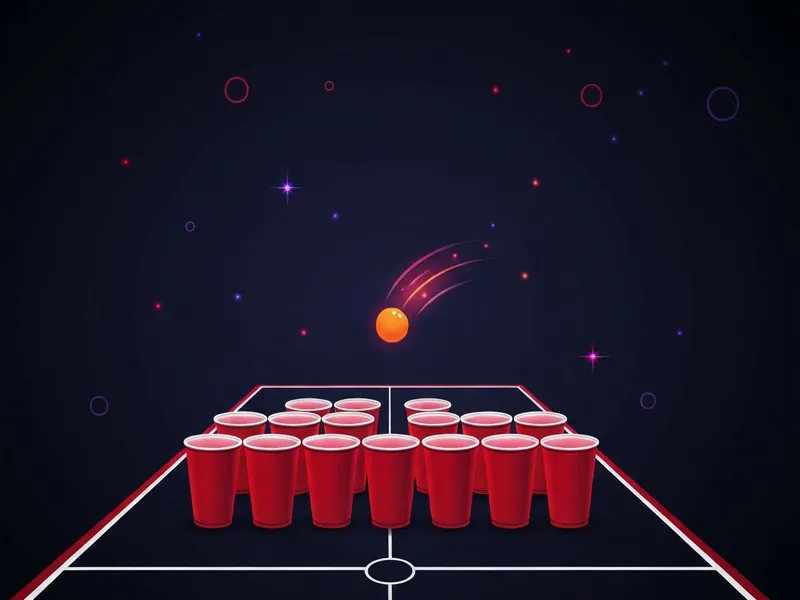
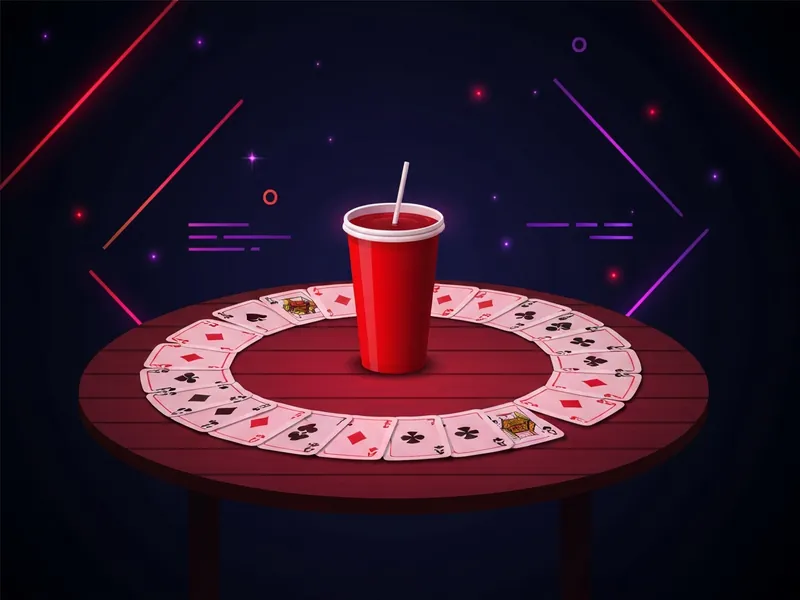
Great game nights have geography. Zone one is the active table - pong, flip cup, Rage Cage - in the room that can take noise and spills, pulled away from walls with anything breakable relocated. Zone two is the card circle - a coffee or kitchen table for Kings Cup and Ride the Bus - somewhere people can sit and hear each other. Zone three is the couch, where the music lives and people recover between rounds.
Put water and snacks in every zone, not just the kitchen - people drink what is within arm's reach. Set the pong table up before guests arrive, cups racked and house rules taped to the wall. A ready table starts games by itself.
Plan the game lineup like a set list
Do not wing the lineup - sequence it in three acts. Act one, the arrival hour, is low-stakes social games that welcome late arrivals and need zero explanation: Never Have I Ever, Most Likely To, or Medusa. Act two, peak hours, is where the energy budget gets spent - beer pong brackets, flip cup rematches, a full round of Kings Cup.
Act three is the wind-down: seated, slower games that let the night land gently, like Horse Race as a betting spectacle or a movie drinking game with light sips. Plan five or six games and expect to play four - a host with the next game ready never hits the dreaded lull, but forcing all six is worse than the lull.
| Party phase | Energy | Best games to play |
|---|---|---|
| Arrival (first hour) | Low, social | Never Have I Ever, Most Likely To, Medusa |
| Peak (hours 2-3) | High | Beer pong, flip cup, Kings Cup |
| Scheduled breather | Medium | Paranoia, Categories, Thumper |
| Wind-down | Low | Horse Race, movie rules, cards without penalties |
Set the house rules before the first sip
Announce three rules while everyone still has full attention. One: the skip rule - anyone can sit out any round or swap any penalty for water, no questions, no commentary. Saying it out loud once removes ninety percent of the drinking pressure for the night. Two: water in all shared game cups, and players drink from their own cup when a penalty lands. Three: game rules are stated before each game, and mid-game disputes are settled by the host, whose word is final.
For the games themselves, agree on your house variants up front - reracks and redemption in pong, bounce rules, whether Buffalo is in effect for the night. Our universal rules guide is a ready-made reference to settle the arguments before they start.
Pace the night like a professional
Alcohol takes twenty to thirty minutes to fully land, which means the pace that feels right at 9 PM is what everyone feels at 9:30. Hosts run the tempo like a DJ - and the trick is scheduling rest without the party noticing it is resting.
Schedule the breathers
Alternate heavy games with light ones and slip a talking game in after a chug-heavy stretch. Paranoia or Categories gives livers a scheduled rest while the room stays loud. Keep a few zero-setup fillers in your back pocket for the same job:
- Word Association and Fuzzy Duck start on a single sentence and buy the room a breather
- The Story Game builds a group tale one word at a time for quiet laughs
- Thumper is the opposite gear - a loud, table-drumming shout-along for when energy needs a jolt
Spot the overshoot early
Watch for the classic signs: sloppy rounds, the same person losing repeatedly, drinks refilled faster than games finish. The fix is never an announcement - quietly start a slower game, or deal someone into cards away from the pong table. If shots appear, treat them as a single ceremonial event, not a running feature; our shots pacing guide covers how to do that responsibly.
The host's safety craft
The invisible part of great hosting: know roughly how everyone is getting home before the night starts, and keep an eye on the two or three heaviest games. Cap chug-based games like Boat Race at showcase rounds, keep the water flowing without making it a lecture, and be the person who hands someone a snack and deals them into a mellow game instead of another round.
End the night deliberately: last game called, water and leftover pizza out, music down a notch. A defined ending gets people home safe and leaves the night feeling complete instead of fizzling. Then hide the marker, because someone will absolutely try to start Wizard Staff at 1 AM.
Frequently asked questions
What do I need to host a drinking game night?
How many games should I plan for one night?
How do I keep guests from drinking too much at a game night?
What is the best first game to start a party with?
Published · Last updated · How we research games