Cups
Boat Race
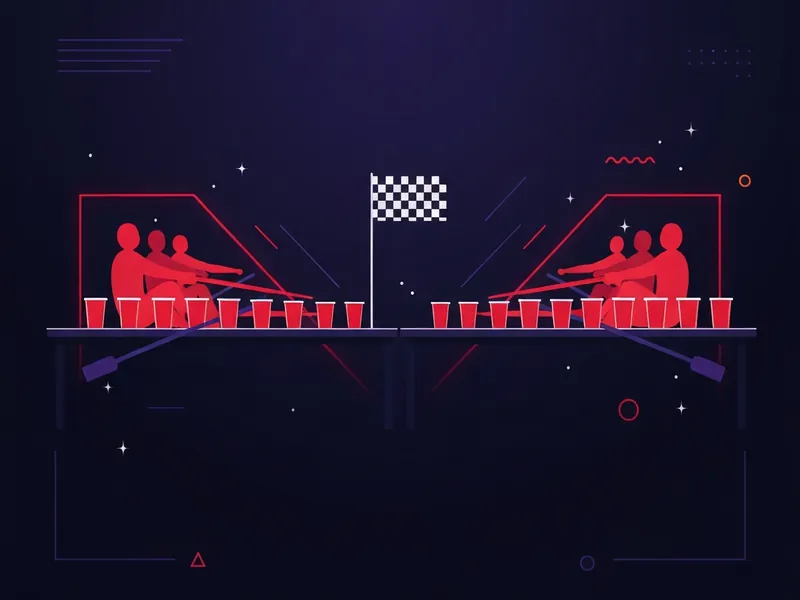
Two lines, one anchor, pure chugging - first crew home wins.
Four cups, four bases - swing for the back cup homer.
Also known as: Baseball (drinking game)
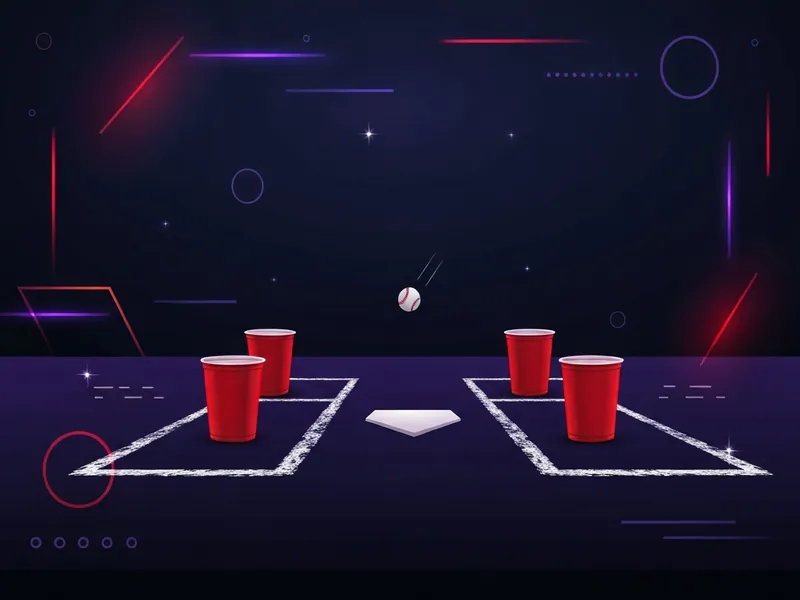
Beer baseball takes America's pastime and shrinks it onto a party table. Four cups line up in front of the batter like bases: sink the closest for a single, the next for a double, then a triple, and - The money shot - The tiny back cup for a home run. Teams bat through innings, runners advance around imaginary bases, outs pile up on misses, and somebody in a backwards cap keeps score like it's the World Series.
What separates beer baseball from every other pong descendant is structure. There are innings, lineups, base runners, RBIs and - In the game's greatest invention - Stolen bases settled by head-to-head flip cup duels. It plays like a real sport: comebacks in the ninth, defensive heroics, arguments over the scorebook. If your group has ever wanted a cup game with a box score, this is the one.
The batting team sends players to the plate in their written lineup. The batter stands at their table edge and throws a ping pong ball at the four-cup lineup on the far end. No bouncing required - Beer baseball uses straight throws, and the defense doesn't touch a ball headed for cups. One throw per pitch; misses count against you.
Sink the nearest cup for a single, second for a double, third for a triple, or the small back cup for a home run. The batter drinks nothing on a hit - The defending team drinks the cup that was made, then refills it. The batter becomes a runner, physically standing on the corresponding base, and existing runners advance the same number of bases.
A missed throw is an out - Traditionally a swinging strike, with some tables playing three missed throws per at-bat as strikes instead (agree beforehand). Three outs retire the side, runners strand where they stand, and the teams swap ends. Half-innings in beer baseball move fast; a clean defensive frame can last ninety seconds.
A runner who advances past third and returns 'home' scores one run, logged by the designated scorekeeper. Home runs clear the bases - Every runner scores plus the batter, and the defending team drinks all four cups on the classic celebration rule. Keep a visible scoreboard; half the fun is the standings dispute.
At any time between pitches, a runner may attempt a steal by calling it out. The runner and a defending player each grab a small flip-cup pour: the duel is drink-then-flip, best of one. Runner lands their flip first, the steal succeeds and they advance a base; defender wins, and the runner is out. Steals are beer baseball's signature drama - Use them like a real manager.
Continue alternating half-innings through the agreed length, home team batting last. Extra innings settle ties, or use a one-inning 'home run derby' shoot-out at the small cup if the night is running long. Winners take the series trophy; losers, by sacred convention, handle cleanup of the field.
Played outdoors with a real plastic bat: the 'pitch' is a gentle ping pong ball toss the batter must strike toward a bases-marked lawn, with cup drinking mapped to where it lands. Half backyard wiffle ball, half drinking game, entirely a summer institution. Requires space and a tolerance for retrieving balls from hedges.
Each team designates a closer who may replace any batter once per game for a single clutch at-bat - Bases loaded, two outs, ninth inning. Adds genuine managerial strategy and a reason for your best shooter to stay warm. The closer must announce entry with appropriate stadium theatrics.
The home run cup is replaced with a communal 'salami cup' built from a splash of each defender's drink. Sink it with the bases loaded and the defense splits the salami; miss into it - Clip the rim without sinking - And the batter drinks it instead. High risk, extremely memorable, keep the contents sensible.
Three-inning games, one-cup pours, and a running season standings board maintained across the whole party or semester. Turns beer baseball into a league night format where multiple teams rotate through the table. The commissioner role - Schedule, standings, disputes - Inevitably becomes someone's entire personality.
Removes flip-cup steals entirely for a cleaner, faster game decided purely on throwing accuracy. Recommended for smaller groups (2v2) where constant steal duels stall the innings, and for tables that take their batting averages a little too seriously. The scorekeeper thanks you.
Beer baseball (often just 'Baseball') is widely considered an American college adaptation of beer pong culture, generally dated to the 1990s or 2000s, though - Fittingly for a folk sport - No inventor has ever been credibly identified. It likely evolved from quarters-based baseball games once ping pong balls became the party standard. The flip-cup stealing mechanic appears to be a later addition that stuck, and campus rulebooks now vary as much as regional baseball traditions ever did.
Published · Last updated · How we research games
Two lines, one anchor, pure chugging - first crew home wins.
Spin the quarter, chug, grab - and dodge the crushed-can mines.
Land the coin in the pitcher and the other team drinks the lot.
Hit their can with the ball, then chug until the catch is made.
Fouls, flags and replays - rules for every broadcast.

Teams, events, medals - the full games, with beer.
BestDrinkingGame.net is a drinking-games site made for adults. Please confirm you are of legal drinking age before you come in.
By entering you agree to our terms and to drink responsibly. Know the legal drinking age where you live (21+ in the US).
You need to be of legal drinking age to use this site. Thanks for stopping by, and stay safe.
Every game here can also be played alcohol-free once you're old enough. See you soon.