Cups
Land Mines
Spin the quarter, chug, grab - and dodge the crushed-can mines.
Two lines, one anchor, pure chugging - first crew home wins.
Also known as: Chug Relay
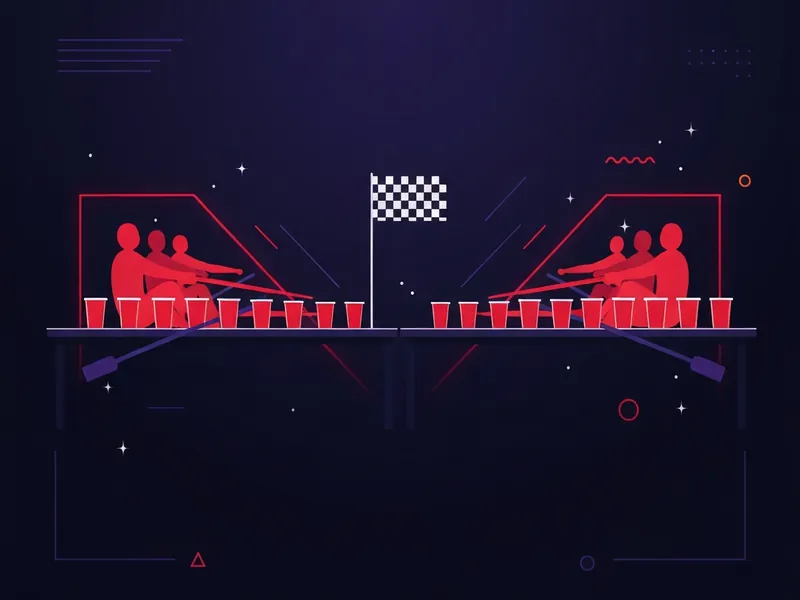
The boat race is the hundred-meter final of drinking games: two teams line up shoulder to shoulder, one cup each, and race down the line in a pure chugging relay. No balls, no flipping, no aim - Just the crew ahead of you finishing their cup so you can start yours. First team to empty every cup down the line wins, and the whole event is over in under two minutes of absolute bedlam.
Its brutal simplicity is why boat races anchor Beer Olympics, rugby socials and university rivalries around the world - Some UK and Aussie schools treat inter-college boat races with the gravity of actual rowing. Strategy still sneaks in: crew order, cup discipline, the sacred anchor leg. But mostly it's the purest team moment in party sports - Eight people, one breath held down a whole line, and a finish decided by half a swallow.
Order matters more than it looks. Your fastest, most reliable drinker leads off to grab an early edge; steady mid-pack racers hold the line; and your coolest head - Not necessarily your fastest - Anchors. Nerves ruin more anchor legs than slow drinking does. Write the order down and lock it before the ref calls teams to the table.
Racers stand with cups on the table, hands at their sides or behind backs. The referee calls the start - 'ready... race!' - And only the two lead-off drinkers may lift their cups. Anyone else touching a cup before their leg is a false start, and false starts carry penalties agreed before the race (classically, the offender restarts with a full cup).
When it's your leg, lift, drink, done - As fast as you can comfortably manage. Spillage is cheating on most tables: 'wear it or drink it' is the traditional standard, meaning visible spillage down your shirt triggers a re-pour or a penalty. Chug within your real ability; a controlled three-second cup beats a choked one-second attempt every time.
Finish your cup and give the agreed signal - The upside-down cup on your head is the universal proof of an empty vessel. The moment your signal is up, the next teammate in line may start drinking, and not one heartbeat sooner. Jumping the handoff is boat racing's cardinal sin, and refs watch handoffs more closely than anything else.
The race funnels down to the anchors, usually with both crews screaming and the lead having changed twice. The anchor's empty cup, signaled properly, ends the race. Close finishes go to the referee, whose ruling is final and who should be someone neither team can bribe with pizza. In a dispute, the traditional resolution is - Obviously - A rematch.
Serious boat race formats run 'there and back': when the anchor finishes, the line reverses and everyone drinks a second cup back up the order, with the lead-off drinker now closing. It doubles the drama and gives early legs a second chance at redemption. Only run returns with small pours; the format adds up fast.
The full regatta: when the anchor finishes, the relay reverses direction and every racer drinks a second cup back up the line, with the original lead-off closing the race. Doubles the length and the lead changes. Use half-size pours - The return leg is where over-poured boat races go wrong.
Each racer must flip their empty cup flip-cup style before the next teammate can start. This hybrid - Essentially competitive flip cup with bigger emphasis on the drinking leg - Adds a skill element that lets slower drinkers claw back time with clean flips. The most common Beer Olympics compromise format.
Uneven crews are balanced with handicaps: the stronger team's racers drink from slightly fuller cups, or their anchor drinks two. Lets a veteran crew race rookies without the outcome being decided at the pour. Set handicaps openly before the start, like golf, so nobody cries sandbagging afterward.
No teams: everyone stands in a circle and the 'baton' travels around it, each player drinking when it reaches them, racing the clock rather than an opposing crew. Record the lap time and challenge the house record all night. A good format for odd numbers or when one group refuses to split up.
Formal crews of exactly four plus a non-drinking 'cox' who sets tactics, calls the handoffs and screams encouragement like a rowing coxswain. The cox is also the team's designated safety officer and hydration wrangler. Adds genuine team-sport structure - And a role for the friend who's pacing themselves tonight.
The boat race borrows its name from rowing - A crew racing in sequence, stroke by stroke - And drinking relays under this name are strongly associated with British and Australian university culture, where inter-college 'boat races' reportedly date back decades. Pinning a birthplace is hopeless: chugging relays likely arose independently wherever teams and cups coexisted. The format is now a codified Beer Olympics event worldwide, and pub sports clubs still contest it with surprising ceremony.
Published · Last updated · How we research games
Spin the quarter, chug, grab - and dodge the crushed-can mines.

Land the coin in the pitcher and the other team drinks the lot.
Hit their can with the ball, then chug until the catch is made.
Float a cup in the pitcher and pour - whoever sinks it drinks it.
Four laps, four beers - the people's endurance event.

Germany's park classic - hit the target, chug while they fetch.
BestDrinkingGame.net is a drinking-games site made for adults. Please confirm you are of legal drinking age before you come in.
By entering you agree to our terms and to drink responsibly. Know the legal drinking age where you live (21+ in the US).
You need to be of legal drinking age to use this site. Thanks for stopping by, and stay safe.
Every game here can also be played alcohol-free once you're old enough. See you soon.