Cards
Higher or Lower
The simplest bet in cards: call it right or drink.
Four aces, one track - bet your sips and scream your horse home.
Also known as: Ace Race · Derby
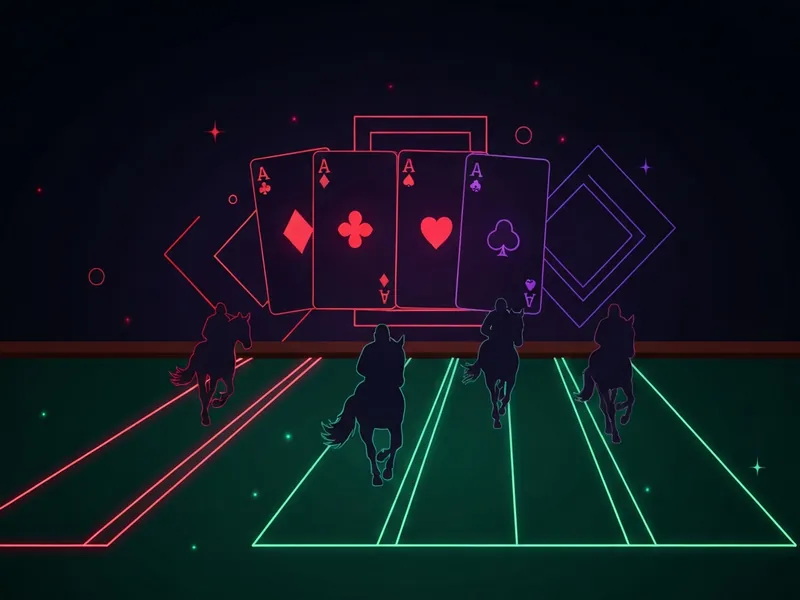
Horse Race turns a deck of cards into a racetrack and your living room into Churchill Downs. The four aces line up as horses, a column of face-down cards forms the track, and every player bets drinks on a suit before the start. Then the dealer, now a race announcer, flips cards from the deck one at a time - each flipped suit sends that ace galloping forward one length. First ace past the final post wins.
What makes Horse Race special is that nobody takes turns and nobody makes decisions after the bet - the whole game is pure spectacle. That sounds like a flaw and plays like a miracle: within three flips the entire room is screaming at a playing card. Winners hand out double their wager in sips, losers drink their own bets, and the next race starts before the noise dies down. It is the best ten-minute show one deck can produce.
Before any card is flipped, each player commits to one suit and a wager measured in sips. Bold bettors go big for a bigger payout; cautious ones bet two or three. Standard odds: lose and you drink your wager, win and you give out double your wager to other players. The dealer records bets aloud or on a napkin - no revisionist betting after the race starts.
The dealer flips the top card of the deck and calls it like a track announcer: the flipped card's suit moves that ace one length up the track. Flip, call, advance, repeat. The rhythm matters - a dealer who milks each flip with commentary ('Diamonds surging on the outside!') transforms the game from card-flipping into genuine sports entertainment.
Here is the cruelty: each time all four horses have passed a face-down track card, the dealer flips that track card over - and whatever suit it reveals, that horse falls back one length. A horse leading wire-to-wire can stumble at the final post, and the collective gasp when a leader gets sent backward is the single best sound in card drinking games.
The first ace to move past the last track card wins the race. Photo finishes go to the dealer's judgment, which is final and traditionally corrupt. The dealer announces the winner with appropriate gravitas, and the payout phase begins immediately while the adrenaline is still high.
Everyone who bet on losing horses drinks their wagered sips. Everyone who backed the winner distributes double their wager in sips to any players they choose - concentrated on one victim or sprayed across the table. Winning bettors handing out ten sips with a dictator's smile is the game's whole power fantasy.
Reshuffle everything, rebuild the track, and race again - each race takes five minutes, so a full card runs naturally in heats. Rotate the dealer-announcer role between races since it is genuinely the best seat in the house. Some tables run a championship: cumulative wins across five races, loser of the series buys the next round of snacks.
Lengthen the track to ten cards and place two of them face up as 'jumps' that trigger their setback immediately when the last horse passes, not at the dealer's leisure. Races run longer with more lead changes, which suits crowds who want maximum drama per race rather than maximum races per hour.
A five-card track with no setback flips at all - first ace past the post wins, pure and simple. Races finish in under three minutes, making this the right format for big parties running the race as a quick interlude between other games rather than as the main event.
Players divide into four stables before the night starts, each permanently backing one suit across every race. Keep a season standings board. Wagers still vary race to race, but the fixed loyalties generate proper sports-fan behavior: chants, rivalries, and inevitable accusations that the dealer is on another stable's payroll.
Each player gets one Sabotage token per race, playable between flips: name a horse and it holds position on its next advancing card. Timing the sabotage against the race leader creates the interaction the base game lacks, at the cost of slightly slower races. Tokens do not carry over between races.
Bets are placed in points, pretzels, or coins instead of sips, with winners collecting double from the pot. Horse Race needs zero modification to work sober because the spectacle is the product - it is routinely the game that non-drinkers at a party enjoy the most, exactly as written.
Horse Race is believed to be an adaptation of much older horse-racing dice and board games that pub-goers rebuilt with playing cards, with most accounts pointing to twentieth-century North American bars and campuses for the drinking version. Its betting structure clearly mirrors real parimutuel racing culture, and the game remains a staple wherever a crowd wants a fast, loud group event out of a single deck.
Published · Last updated · How we research games
The simplest bet in cards: call it right or drink.

Climb the table hierarchy - or serve drinks at the bottom of it.

The family card game, with consequences for every +4.

Slap the pile, count the cards, and never blink.

Fouls, flags and replays - rules for every broadcast.

Boxed wine on a spinning clothesline - Australia's finest.
BestDrinkingGame.net is a drinking-games site made for adults. Please confirm you are of legal drinking age before you come in.
By entering you agree to our terms and to drink responsibly. Know the legal drinking age where you live (21+ in the US).
You need to be of legal drinking age to use this site. Thanks for stopping by, and stay safe.
Every game here can also be played alcohol-free once you're old enough. See you soon.