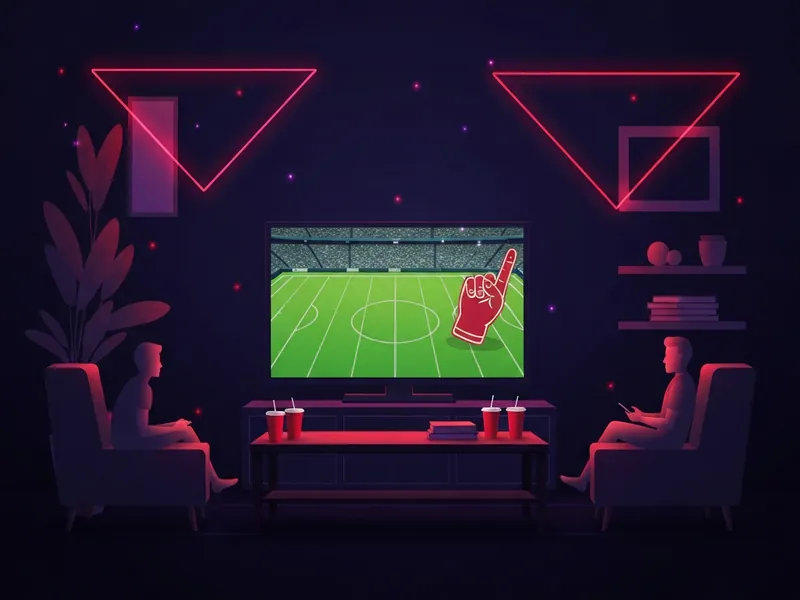
Screen
Sports Drinking Game
Fouls, flags and replays - rules for every broadcast.
The **World Cup drinking game** is a football drinking game built for a tournament, not a match. Every four years...

The World Cup drinking game is a football drinking game built for a tournament, not a match. Every four years thirty-two (now forty-eight) nations play a group stage where up to four matches a day pile up, then a knockout bracket where a single game can run through extra time and a shootout. Goals are rare and mean everything, so most of the sipping rides on the stuff that happens between them: bookings, VAR checks, a winger going down as if shot, and the commentators reminding you which side lost on penalties last time.
Football's flow is what shapes this sports drinking game. There are no commercial breaks in the play, so triggers fire steadily for forty-five minutes, stop dead at halftime, then pick up again. A nil-nil group game gives you corners, cards and replays; a knockout tie that goes to a penalty shootout gives you the tensest five minutes on television, with a sip on every kick. Which stage you are watching changes the pace more than which teams are playing.
The heart of the game: 14 triggers. Read them out before you press play, keep the ones your group likes, cut any that would fire every minute, and remember that a "drink" is one sip.
| When this happens… | …you drink |
|---|---|
| A team scores a goal | Drink for 3 seconds |
| A shot misses or the keeper makes a save | Sip |
| The referee shows a yellow card | Sip |
| The referee shows a red card | Sip twice |
| The commentators mention VAR or a review starts | Sip |
| A slow-motion replay is shown | Sip |
| A corner kick or free kick is taken | Sip |
| The broadcast cuts to a manager on the touchline | Sip |
| A player goes down and stays down | Sip |
| The camera shows fans in the crowd | Sip |
| The commentators mention a player's country or a past World Cup | Sip |
| A substitution is made | Sip |
| Stoppage time or extra time is announced | Sip |
| The match goes to a penalty shootout | Sip twice |
A single group game gets the full list. A knockout tie with extra time and penalties in play is a longer night, so drop the replay and free-kick rules and keep goals, cards, VAR and substitutions. A full group-stage matchday of three or four kickoffs gets about six triggers and no more.
There are no breaks in a football half, so the sipping is steady rather than bursty: a corner, a booking, the manager screaming on the touchline, a striker rolling around after a tackle. Halftime is your fifteen-minute reset; the fourth official's stoppage-time board is your warning that the last flurry is coming.
Football goals are rare, and in a World Cup group game you might see two. That is why a goal is the three-second drink rather than a sip - a VAR check that rules one out is a sip for the check and a groan for the room, and a goal that stands after a check is worth both.
A level knockout game adds two fifteen-minute halves of extra time and then a shootout. Keep the goal rule but drop everything else for extra time, then run the shootout as its own game: a sip on every kick, two on a save or a miss, and the three-second drink on the kick that decides it.
Each person or side backs a country. Your side drinks whenever your team concedes, and hands out a sip whenever your team scores. In a neutral match, split the room and back the two teams on the pitch - and in the group stage, whoever's nation finishes bottom of its group drinks for their whole group.
Before the round of sixteen, everyone fills out the knockout bracket down to the final. Whenever a result busts someone's bracket, that person drinks, and whoever still has their champion alive after each round hands out a sip to everyone whose pick went home.
Make a grid of final scorelines (0-0, 1-0, 2-1, and so on). Whoever holds the square that matches the full-time score hands out three sips instead of collecting a pot; in a knockout tie, a shootout result counts as a draw square, so the 1-1 and 0-0 holders split the payout.
Published · Last updated · How we research games
Fouls, flags and replays - rules for every broadcast.
One shot of beer, every minute, for sixty minutes.
Ten cups, two balls, eternal glory - the classic table sport.
Drink, set, flip - the fastest team relay in party sports.
BestDrinkingGame.net is a drinking-games site made for adults. Please confirm you are of legal drinking age before you come in.
By entering you agree to our terms and to drink responsibly. Know the legal drinking age where you live (21+ in the US).
You need to be of legal drinking age to use this site. Thanks for stopping by, and stay safe.
Every game here can also be played alcohol-free once you're old enough. See you soon.