World
Goon of Fortune
Boxed wine on a spinning clothesline - Australia's finest.
Nine pubs, nine pars - the great British drinking crawl.
Also known as: Bar Golf
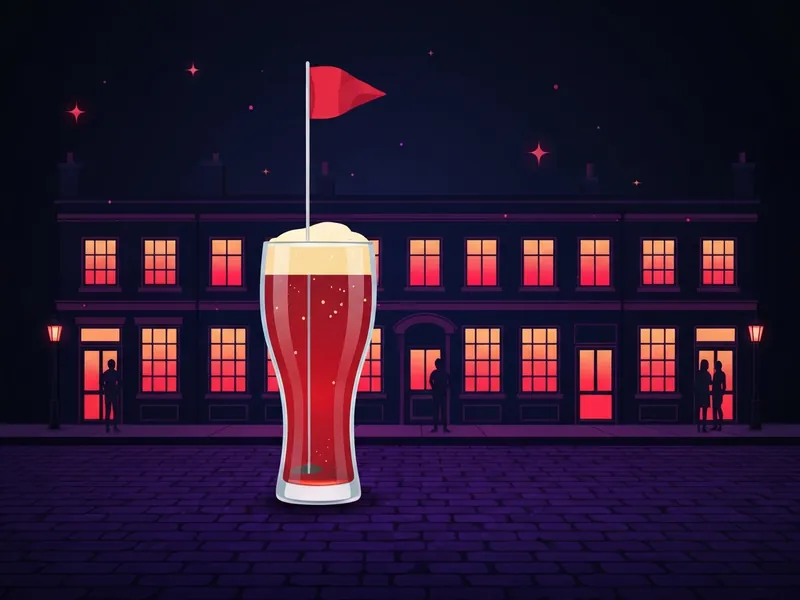
Pub Golf turns a night out into a nine-hole championship. Each pub on your route is a 'hole' with a designated drink and a par - The number of sips you're allowed to finish it in. Sink your pint in two gulps on a par-3 hole and you're one under; nurse it across six sips and you're writing a bogey on the scorecard. Lowest total score after nine pubs wins the night.
Born in British student towns and now played everywhere from London to Sydney, Pub Golf works because it gives a bar crawl structure, stakes, and a uniform. Half the fun is the planning - Mapping the course, setting fair pars, printing scorecards - And the other half is watching your most competitive friend agonize over a bottle of cider like it's a downhill putt at Augusta. Dress code: full golf attire, obviously.
Pick nine pubs forming a walkable loop, ideally ending near food and transport home. Vary the holes: big pints get high pars, small bottles get low ones, and one wildcard hole (a cocktail, a half of stout) keeps it interesting. Front-load the heavier drinks - Hole nine should never be your hardest par.
Par is the number of sips (drinking motions) allowed to finish the hole's drink at even score. A pint of lager plays as a par 4, a bottle of alcopop a par 3, a mixed drink a par 2. Test your pars against reality: if nobody can make par without chugging dangerously, raise it. Good pars create close scorecards.
At each pub, everyone orders the designated drink and finishes it counting every sip. Three sips on a par-4 hole scores 3 - A birdie. Five sips scores a bogey 5. The scorekeeper records everyone's strokes before the group moves on. You don't have to race; you have all visit long to finish the hole.
Penalty strokes keep the round honest: +1 for spilling your drink, +1 for using the toilet during a hole (the infamous 'water hazard'), +2 for failing to finish the drink, and +3 or disqualification for skipping a hole. Some groups allow one 'mulligan' per player per round. The captain's ruling settles all disputes.
Between pubs, the group walks together to the next hole - No splitting up, no stragglers left behind. This is where you drink water, eat something, and talk tactics. The walk is a feature, not dead time: it paces the round, sobers the scoring debates, and keeps a three-to-six-hour night from collapsing at hole five.
After hole nine, gather at the final stop - The '19th hole' - For the scoring ceremony. Lowest total strokes wins the trophy and eternal bragging rights; highest score traditionally buys the winner's next drink or wears a forfeit. Keep the scorecard as evidence, because this argument will resurface at every future round.
The full-length version: 18 pubs, usually run as two nine-hole halves with a proper food break at the turn. Pars must be set low-alcohol and generous - Think halves, singles, and soft-drink holes mixed in - Because no responsible course plays 18 pints. Reserve it for all-day events like birthdays and stag weekends, with a strict pace-of-play schedule.
Two teams compete instead of individuals: at each hole, compare each pairing's sip counts and award the hole to the lower scorer, with halves for ties. Team with the most holes after nine lifts the cup. This format rescues players having a bad round - You can lose your match and still win the night on team points.
Each hole carries a gimmick alongside its par: drink left-handed on hole two, no phones on hole four, everyone speaks in golf commentary on hole seven. Breaking a gimmick costs +1 stroke. It plays sillier and slower than the classic game, and it's the best format for groups who care more about the bit than the leaderboard.
Every hole is a small, quick drink - Bottles, halves, and single mixers, all par 2 or 3 - Making a lighter round that's friendlier for weeknights and mixed-pace groups. Scores bunch tightly together, so penalties and birdies decide everything. Also the recommended intro format for first-time course designers who aren't sure how pars play out.
The strict-etiquette version: full golf dress code enforced with a +2 penalty at tee-off for violations, formal honors system for drinking order (best previous hole tees off first), and a written local rule sheet per pub. Play it when your group loves ceremony - The pomp is the point, and the scorecard becomes a keepsake.
Pub Golf is generally credited to British pub and university culture, where organized bar crawls with scorecards appear to have taken hold by the 1990s and spread through student unions across the UK. Its exact origin pub is unknown - Plenty claim it - And similar 'bar golf' crawls emerged in Australia, Ireland, and the US. The polo-shirts-and-visors dress code became standard somewhere along the way, and today it is a rite of passage on British high streets.
Published · Last updated · How we research games
Boxed wine on a spinning clothesline - Australia's finest.
Float the shot glass, pour with a surgeon's hand - don't sink it.

Count to 31 in turns - whoever says 31 drinks. Simple. Deadly.

Korea's clapping trap - clap on every 3, 6 and 9 or drink.

Tape every empty to the last - grow the mightiest staff.
Pick a topic, go around the circle, don't you dare blank.
BestDrinkingGame.net is a drinking-games site made for adults. Please confirm you are of legal drinking age before you come in.
By entering you agree to our terms and to drink responsibly. Know the legal drinking age where you live (21+ in the US).
You need to be of legal drinking age to use this site. Thanks for stopping by, and stay safe.
Every game here can also be played alcohol-free once you're old enough. See you soon.