Drinking Games for Large Groups
Big groups break most drinking games. With fifteen people, a game with individual turns means everyone waits ten minutes to do one thing - and the party drifts off to the kitchen. The games that survive a crowd share one trait: everybody is involved on every turn, either because the whole circle plays at once or because teams keep the downtime near zero. Here is how to pick, set up, and run drinking games for 10, 15, or 25 people without losing half the room.
The golden rule: minimize waiting, maximize involvement
Before picking a game, count the seconds between one player's turns. In a four-person card game you act every fourth turn - fine. In a fifteen-person circle you act every fifteenth, and the game dies. Large-group games solve this three ways: simultaneous play (everyone acts at once), team play (your side is always doing something), and spectacle (the waiting is the entertainment).
The other big-group killer is rules complexity. A rule set you can explain in one breath survives being taught to twenty tipsy people; anything longer needs a printed sheet or a confident host. When in doubt, choose the dumber game - at scale, simple is always funnier.
| Group size | Go-to game | Format |
|---|---|---|
| 8-12 | Medusa or 21 | One circle, everyone plays each round |
| 12-20 | Flip Cup | Two team lines, 90-second races |
| 15-25 | Rage Cage | One table, two balls, join anytime |
| 20+ | Beer Olympics | Rival teams, scoreboard, all afternoon |
Circle games that scale to 20+
Prompt games are the easiest wins because everyone plays every round. Never Have I Ever is the undisputed big-group king - twenty players means twenty confessions per statement, and the reveals get better as the circle grows. Most Likely To is its louder sibling: on the count of three, everyone points, and the person with the most fingers aimed at them drinks.
Counting games that get funnier with size
21 and Cheers to the Governor both send a count around the circle with rules that mutate as you play - and with fifteen people, someone always torpedoes the count around number eleven.
Medusa needs at least eight to work at all: heads down, heads up, and anyone who locks eyes with another player drinks. It is thirty seconds of silence followed by an explosion of laughter, on repeat.
Cup-in-the-middle games for a big circle
Fingers needs just one communal cup. Everyone lays a finger on the rim, a caller guesses how many will stay as players pull off, and a correct guess drops that player out until a single loser is left holding the cup. The more fingers on the rim, the wilder the odds.
Chandelier rings that same center cup with a personal cup for each player. A ping-pong ball bounced into your cup means you drink; one landing in the middle means everyone does - a center-cup game that happily absorbs a crowd.
Team relays: the backbone of a big night
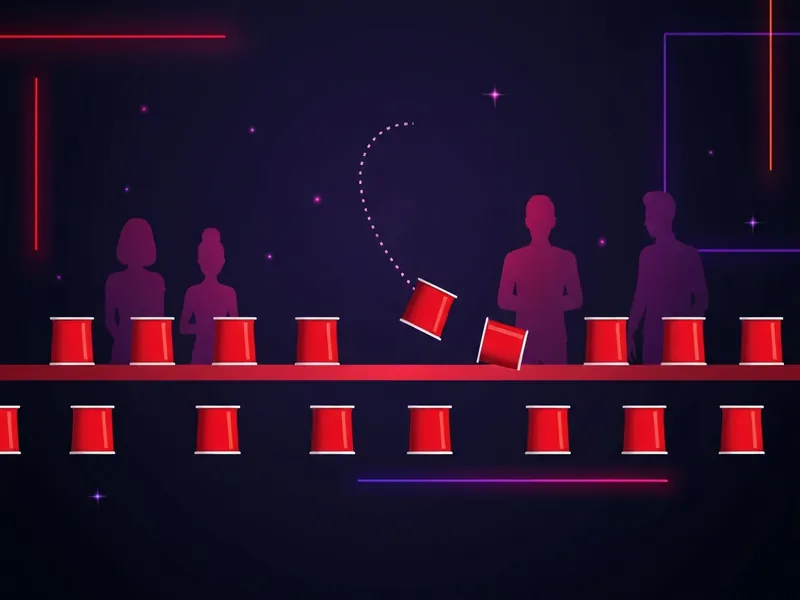
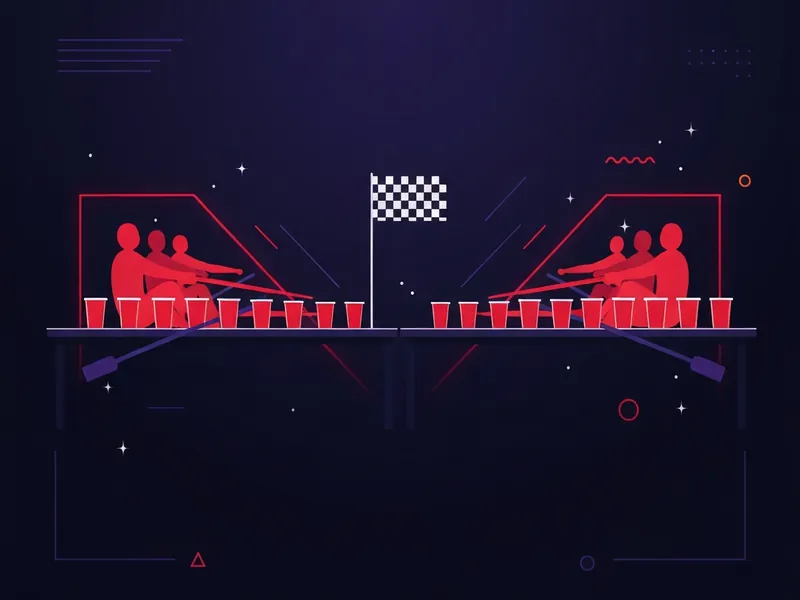
Flip Cup is the single best large-group drinking game ever devised. Two lines, one cup each, drink-set-flip down the row - a full race takes ninety seconds, fits any skill level, and produces instant rematch culture. Ten a side works as well as five. Boat Race is the stripped-down version for crews who just want to chug in sequence, and it makes a perfect grudge-settler between rounds.
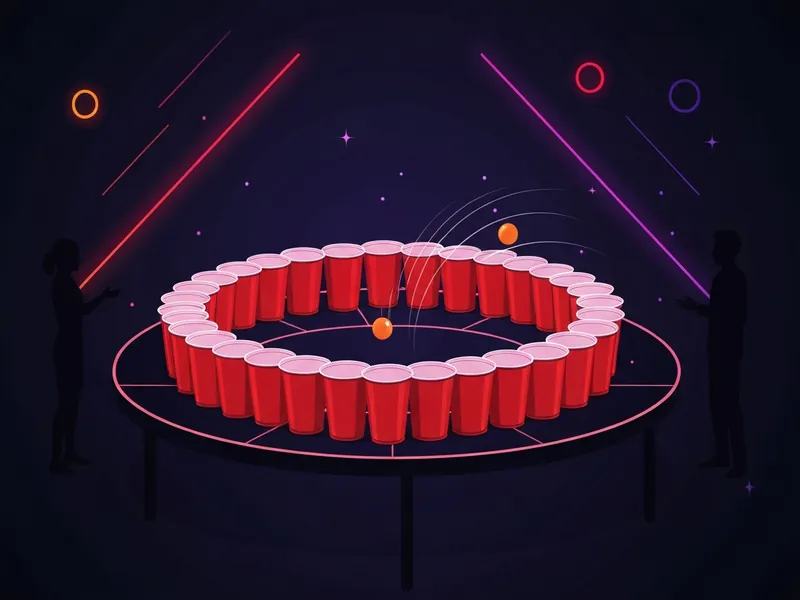
For aim-based team play, Rage Cage and Slap Cup put a whole crowd around one table with two balls circulating - the chase mechanic means the action literally runs around the circle. Civil War, the 3v3 no-turns version of pong, is the pick when you have a few sharpshooters who want rapid fire.
- Flip Cup - 6-20 players, the perfect team relay
- Rage Cage - 6-16 players around one table, pure chaos
- Boat Race - two crews, one chug relay, two minutes
- Civil War - 3v3 rapid-fire pong for the competitive core
Spectator games: when watching is the fun
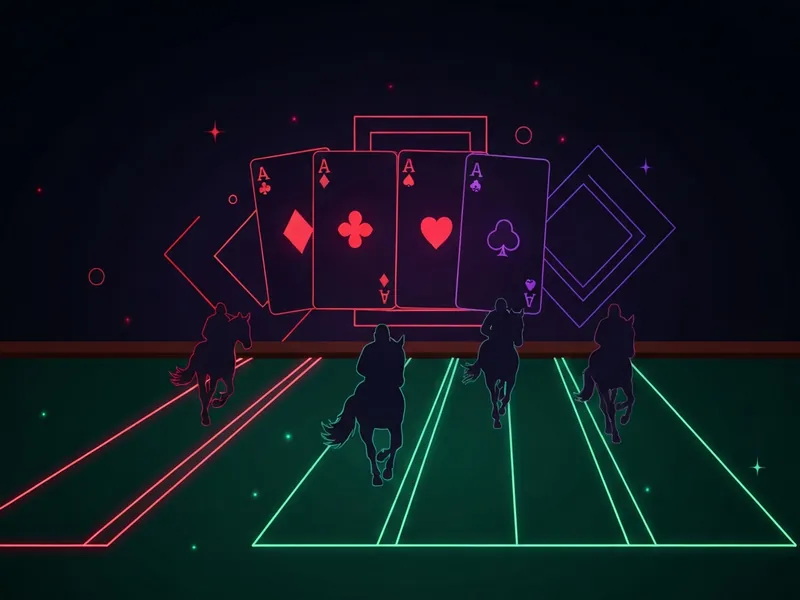
Some games work at scale because the whole room becomes the audience. Horse Race is the best example - four aces race down a track of face-down cards while everyone bets sips on their suit, and a dozen people screaming at a playing card is a genuine party highlight. Dizzy Bat does the same outdoors: one player chugs, spins, and swings while twenty people provide commentary.
Karaoke Roulette turns performance anxiety into content - a random song lands on a random victim, who sings or drinks. Spin the Bottle, rebuilt as a dare-or-drink pointer, does the low-tech version - one flick sends the whole ring quiet as a crowd of twenty watches the bottle decide someone's fate. These games slot perfectly between team rounds, giving the room a shared focal point while people refill and regroup.
Go full tournament: Beer Olympics
If you have twelve or more people and a whole afternoon, stop playing individual games and run a Beer Olympics. Split into teams of three or four, pick four to six events - pong, flip cup, quarters, Beersbee if you are outside - and track points on a visible scoreboard. Team identity does something magical to a party: people who barely know each other start high-fiving by event two.
Keep events short and rotate teams through stations so nobody stands idle. A medal ceremony, however ridiculous, is mandatory. For the full planning checklist - space, supplies, scheduling, and keeping twenty guests fed and hydrated - see our guide to hosting a drinking game night.
Logistics and pacing for a crowd
Two things separate a smooth big night from a chaotic one: enough supplies and deliberate pacing.
What to buy for a big drinking game night
Big groups burn through supplies fast. Budget at least two 16 oz party cups per person per hour, a sleeve of ping pong balls, and one sturdy table per eight players.
Use water in all game cups and have players sip from their own drinks. With twenty mouths in play this is a hygiene rule, not a suggestion - and it also lets everyone control their own pace.
Pace the room like a DJ
Start with a light circle game while people arrive, build to team relays at peak energy, and wind down with a slow spectator game. Put food and water where the games are, not in another room.
Agree on a no-pressure rule up front: in a crowd of twenty, someone is always fine to skip a round, and the game should roll on without comment. Our universal rules guide covers the etiquette worth announcing before you start.
Frequently asked questions
What is the best drinking game for 20 people?
How do you keep a large group engaged between turns?
How much do I need to buy for a big drinking game night?
Do large group drinking games work indoors?
Published · Last updated · How we research games